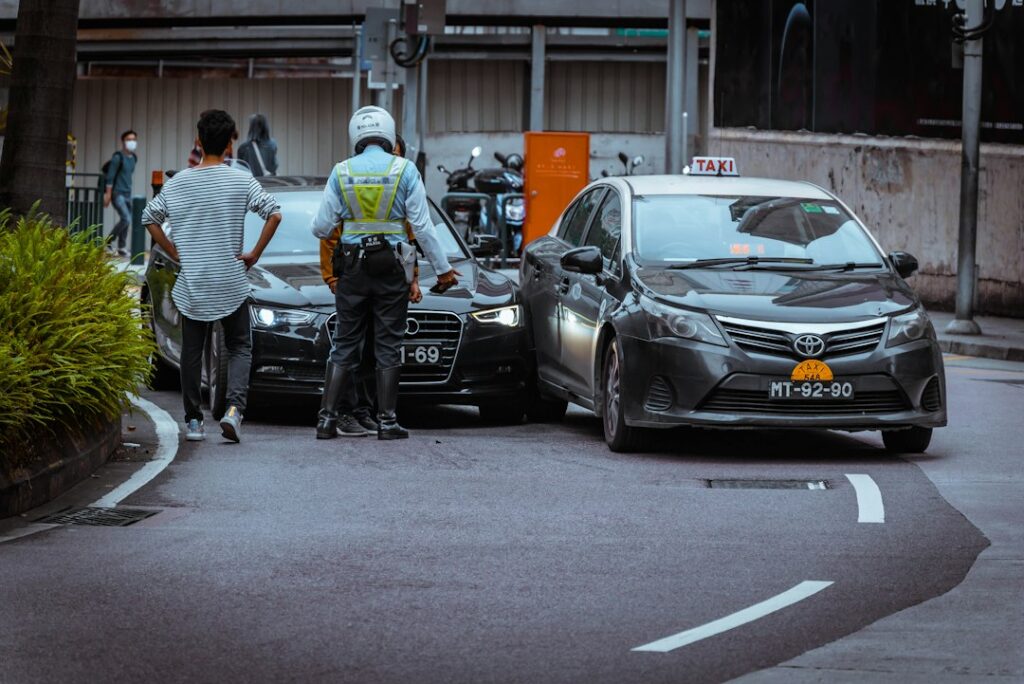
What should happen first after a crash?
After a car accident, protect people before property, then document the scene and notify the proper authorities. Insurance decisions are easier when the facts are recorded promptly and accurately.
If anyone is injured, call 911 and request medical assistance. Do not move an injured person unless there is an immediate danger, such as fire or the risk of another collision. Turn on hazard lights, move to a safer location if the vehicle can be driven and no serious injury is involved, and stay at the scene.
In Townsend, changing weather, wet pavement, winding roads, wildlife, and seasonal traffic can affect visibility and stopping distance. These conditions may matter when describing what happened, but they do not automatically determine who is responsible.
Should the crash be reported to law enforcement?
Yes, crashes involving injury, death, or property damage should be reported. Tennessee also requires certain crashes to be reported to the Department of Safety and Homeland Security.
Call the appropriate law enforcement agency from the scene. A police or highway patrol report creates an official record, but it does not replace notifying the insurance company. The report may also take time to become available.
Tennessee’s current Owner/Driver Report requirement generally applies when a crash causes:
- Death or injury
- More than $1,500 in property damage to any one person, including the driver
- More than $400 in damage to state or local government property
The report must generally be submitted within 20 days, regardless of who appears to be at fault. Failing to submit a required report can affect driving privileges and vehicle registration. If there is uncertainty about whether the damage exceeds the threshold, preserve the information and ask the investigating agency or the Tennessee Department of Safety for guidance.
What information should drivers exchange?
Exchange information calmly, without arguing about fault or promising to pay for damage. Tennessee safety guidance recommends collecting more than just a name and insurance card.
Record:
- Full names and contact information
- Driver’s license information
- Vehicle year, make, model, and license plate number
- Insurance company and policy number
- Vehicle owner’s name if different from the driver
- Names and contact information for witnesses
- Name or identification number of the investigating officer
- Exact location, direction of travel, and approximate time
Use a phone to photograph insurance cards, driver’s licenses, license plates, vehicle positions, road conditions, traffic signs, visible damage, and nearby hazards. Take wide photographs that show the surroundings as well as close photographs of the damage.
Avoid posting accident photographs or statements on social media. Public comments can be misunderstood and may later conflict with the information provided to an insurer or investigator.
What should be said at the scene?
Give factual information to law enforcement and the insurance company, but avoid guessing. Statements such as “I was distracted,” “I caused it,” or “There was no damage” can create problems if made before all facts are known.
A better approach is to describe what was observed:
- “The other vehicle struck the rear passenger side.”
- “The road was wet.”
- “The light had just changed.”
- “My neck began hurting later that evening.”
Do not conceal relevant facts, but do not speculate about speed, fault, injuries, or repair costs. The insurance investigation will consider statements, photographs, vehicle damage, the crash report, witness accounts, and policy terms.
When should the insurance company be notified?
Notify the insurer as soon as reasonably possible, even if the damage seems minor or another driver says they will pay. Policies commonly require prompt notice of a loss, and waiting can make it harder to investigate.
When reporting the crash, provide:
- Date, time, and location
- Names of drivers and passengers
- Vehicle information
- Whether police or emergency personnel responded
- Description of injuries, even if symptoms are mild
- Damage that is visible
- Names of witnesses
- Any available report or incident number

Ask how the claim will proceed, what deductible may apply, where the vehicle can be inspected, and whether rental transportation is covered. Keep the claim number and the name of each person handling the claim.
Reporting an accident does not automatically mean the insurer will pay every expense. Coverage depends on the policy, the type of loss, deductibles, exclusions, liability findings, and available limits.
What if the other driver is uninsured or does not cooperate?
Report the crash to the insurer even if the other driver has no insurance, refuses to exchange information, or leaves the scene. Uninsured or underinsured motorist coverage may apply, depending on the policy and circumstances.
If the other driver leaves, do not chase the vehicle. Call 911, provide the direction of travel and any identifying details, and photograph the scene if it is safe. A license plate, partial plate, vehicle description, witness statement, or nearby camera may help investigators.
Tennessee requires financial responsibility for drivers, but not every driver involved in a crash will have adequate insurance. A policy’s uninsured motorist provisions can be especially relevant when injuries are involved.
How should injuries be handled?
Some injuries become noticeable hours or days after a collision. Seek medical evaluation for pain, dizziness, numbness, headaches, breathing problems, confusion, or any symptom that develops after the crash.
Tell medical providers that the condition followed a motor vehicle accident and keep copies of bills, discharge instructions, prescriptions, and work-related documentation. Medical treatment should be based on health needs, not solely on an insurance claim.
Passengers should document injuries separately from vehicle damage. A passenger may have a claim involving the driver of the vehicle occupied, another driver, or more than one policy, depending on the facts.
What happens to the damaged vehicle?
Do not authorize extensive repairs before the insurer has had a reasonable opportunity to inspect the vehicle, unless emergency work is needed to prevent additional damage or protect safety. Ask what photographs, estimates, inspections, or storage arrangements are required.
Keep damaged parts or personal property if the insurer asks for them. Remove valuables from a vehicle before it is towed, and document the vehicle’s condition before it leaves the scene.
If the vehicle is declared a total loss, the settlement is generally based on the vehicle’s value under the applicable policy, subject to the deductible and other terms. A loan balance does not necessarily equal the vehicle’s market value. Gap coverage, if purchased, may address some difference between a settlement and an outstanding loan.
What records should be kept?
Create one accident file containing:
- The policy and declarations page
- Claim number and adjuster communications
- Crash report and photographs
- Medical records and bills
- Repair estimates and towing or storage invoices
- Rental vehicle records
- Written notes about symptoms and missed work
- Copies of emails, letters, and submitted forms
Write down conversations soon after they occur. Save original photographs rather than relying only on edited or compressed versions.
If a claim is delayed, denied, or disputed, request the explanation in writing and review the policy language. Tennessee’s insurance regulator provides consumer education and dispute-related assistance, but an agency review does not replace medical care or legal advice. Serious injuries, disputed fault, an uninsured driver, or a potential lawsuit may require advice from a qualified attorney.
A careful record, prompt notice, and accurate reporting are the most useful insurance steps after a collision.